
Why the original recording matters
Riverside’s company overview describes a platform built around remote podcasts and video interviews. That starting point distinguishes it from a tool used only after someone hands you a finished recording.
If you control production, make the recording easier to clip before editing begins. Ask one question at a time, encourage answers that name the subject, and leave a moment between exchanges. You are not scripting every answer; you are creating a source that makes sense when a useful passage stands alone.
If you are a campaign clipper using somebody else’s supplied file, those production advantages may matter less. Judge the import-to-export path and the permissions in the brief. You do not need a full recording workflow solely because a tool also offers clip generation.
What Magic Clips adds
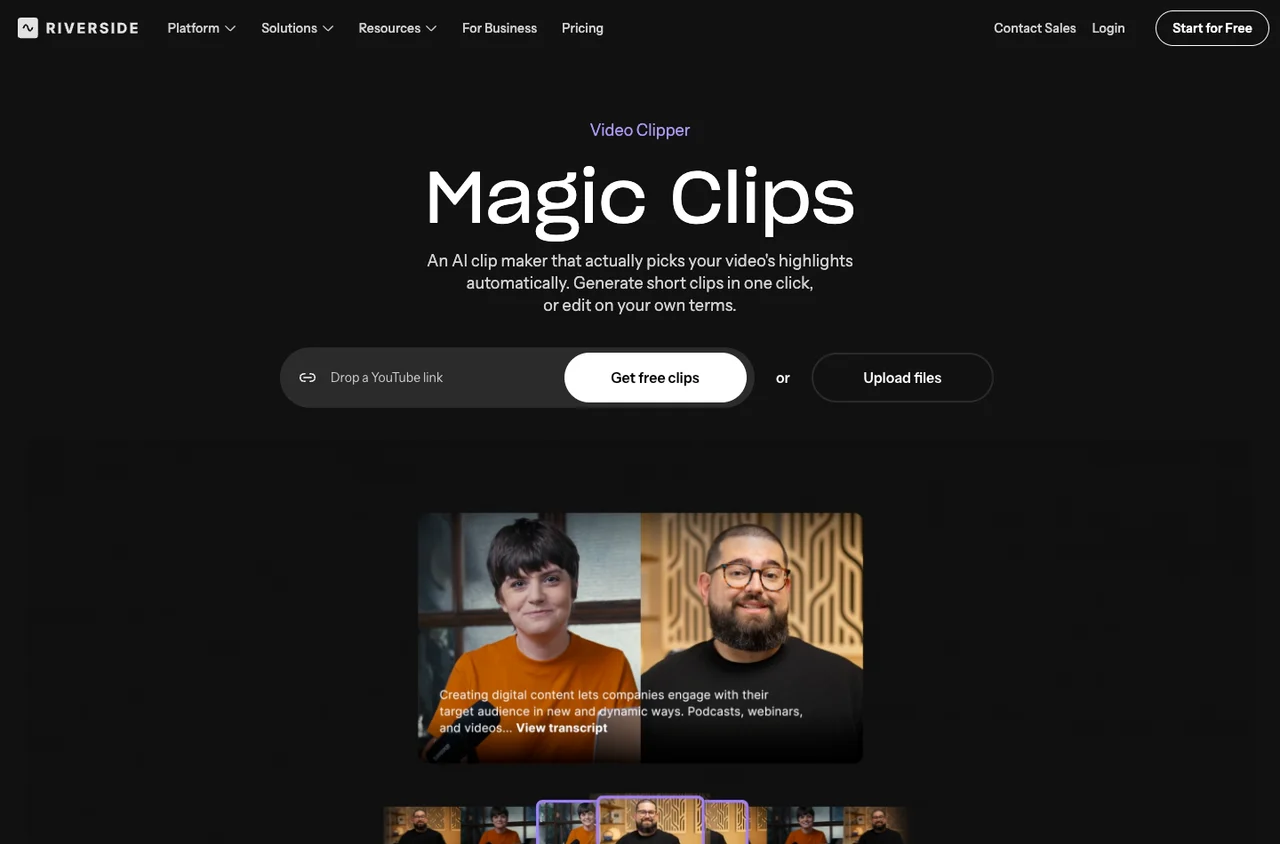
The Magic Clips page describes finding highlights automatically and turning them into shorter videos that can be edited. Its public illustrations focus on spoken content and social presentation. Treat the generated extracts as candidate edits, not finished editorial decisions.
A useful podcast clip has a complete thought. If the answer begins “that happened last year,” retain enough of the question or surrounding context for a new viewer to know what happened. If the cut ends before the explanation, a clean-looking export still fails the viewer.
Check the speaker framing when the conversation overlaps. The person making the point should not disappear while an inactive participant fills the frame. Watch caption timing and listen for clipped breaths at the start and end. These small repairs can matter more than changing the template.